

Classic Car Insurance in Arizona: Agreed Value, Garage Storage, and Show Season
Classic car insurance in Arizona is built around one idea: the value of your car should be settled before a loss, not argued about after one. A standard auto policy usually pays actual cash value, which can fall well short of what a collector car is worth. Collector policies are commonly written on agreed value instead, in exchange for usage and storage rules that fit how most collectors actually drive.
We are Howard Castle Insurance, Independent Agents based in Gilbert. We shop collector-car coverage across multiple carriers that we have relationships with, for Arizona owners of classics, antiques, muscle cars, vintage trucks, and project cars. This article explains how those policies work and what carriers commonly ask.
Why a classic car on a regular auto policy can be underinsured
A regular auto policy is designed for everyday cars that lose value over time. When a covered car is totaled, it typically pays actual cash value, based on what similar cars are worth after depreciation. That method can work against a car that has gained value, been restored, or is rare.
A restored muscle car or an original vintage pickup may be worth far more to the collector market than a standard valuation reflects. Restoration work, rare parts, and documented history do not always show up in a typical auto settlement. The result can be a check that does not come close to replacing the car.
A standard policy also is not designed around how collectors use their cars: a few shows, weekend drives, and long stretches in the garage. A collector policy is built for that pattern.
If you have questions about the everyday car in your driveway, our auto insurance page and our guide to car insurance in Gilbert cover standard coverage and liability limits. We will not repeat them here.
Agreed value vs. actual cash value
Agreed value means you and the carrier agree on what the car is worth when the policy is written. If the car is a covered total loss, that agreed amount is generally what the policy pays, minus any deductible that applies. Actual cash value is decided after the loss and subtracts depreciation.
Here is the difference in plain terms:
- Actual cash value: The carrier determines the value at the time of the loss. Depreciation, condition, and market comparisons all factor in.
- Agreed value: The value is set up front, usually based on appraisals, photos, receipts, or recent sales of similar cars. You know the number before anything happens.
- Stated value: Some policies use this term. It can sound like agreed value but may work differently, often paying the lesser of the stated amount or actual cash value. Read the settlement language carefully.
Terms vary by carrier, so we always compare the valuation wording, not just the price.
To set an agreed value, carriers commonly ask for:
- Recent photos of the exterior, interior, and engine
- A professional appraisal, often for higher-value cars
- Receipts for restoration work and major parts
- Documentation of originality, matching numbers, or provenance if relevant
Values change. If your car's market value climbs, or you finish a major round of work, ask about updating the agreed value at renewal.
Mileage limits, pleasure use, and the daily-driver rule
Collector policies commonly come with usage rules. These rules are part of why collector coverage is priced differently from a regular auto policy. They vary by carrier, so treat the list below as typical, not universal.
- Limited mileage: Many carriers set an annual mileage allowance or offer tiers. While some do not set a hard cap.
- Pleasure use: Shows, club events, parades, and occasional weekend drives are common allowed uses. Commuting and errands may not be.
- A separate daily driver: Many carriers want licensed drivers in the household to have a regular car for everyday use.
- Driver history: Carriers may look at driving records and age of drivers.
If you want to drive your classic to work once in a while, ask before you assume it is allowed. A policy that does not fit how you drive is not a policy you can count on.
Arizona also offers special plates for some older vehicles. Plate eligibility and any use limits are set by Arizona MVD, not by your insurer. Check current MVD rules before choosing a plate.
Garage, carport, and storage requirements in Arizona heat
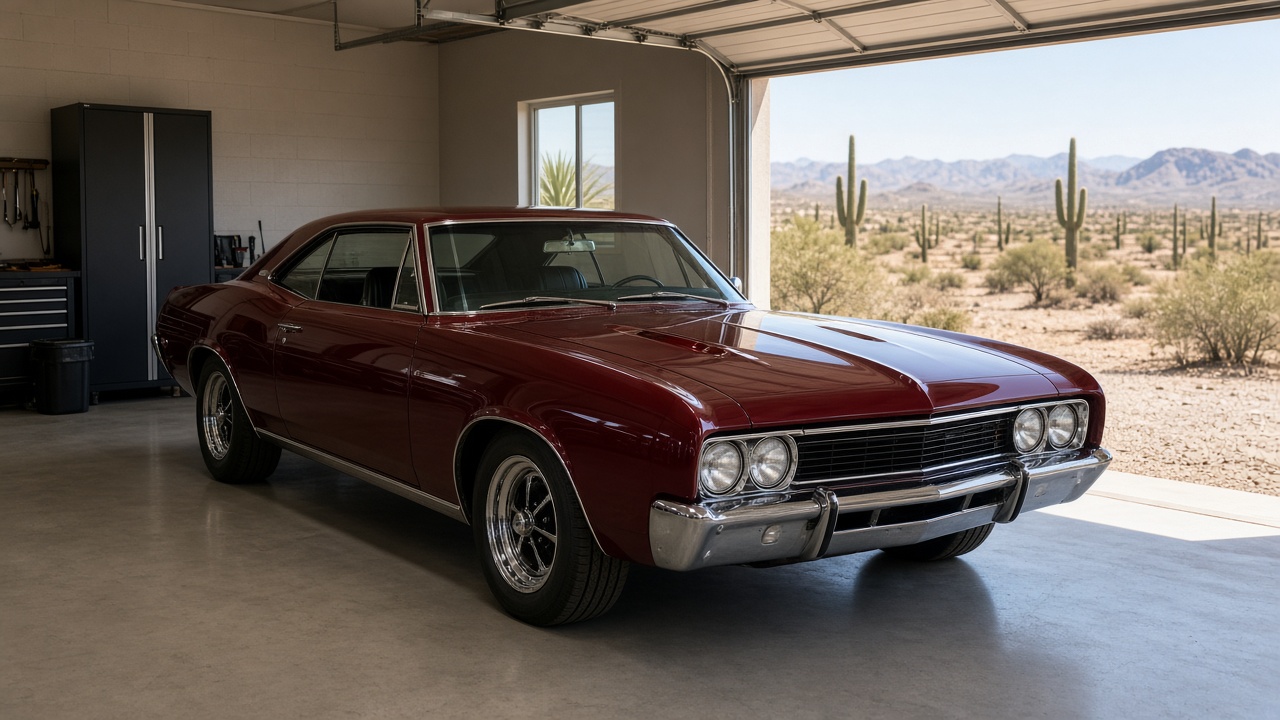
Many collector carriers expect the car to be kept in a secure, enclosed space when it is not being driven. In Arizona, storage protects the car from more than theft. Summer heat and constant sun can fade paint, crack dashboards, and dry out rubber and upholstery.
Arizona's dry climate is one reason collectors like to buy and keep cars here. Older bodies tend to hold up well without the road salt and humidity of other regions. The trade-off is sun and heat, which makes good storage even more important.
Common storage questions carriers ask:
- Is the car in a locked, enclosed garage?
- Is it a private garage, a shared garage, or a storage facility?
- Is a carport acceptable? Many carriers treat a carport differently from an enclosed garage, so ask.
Your garage contents for your car, tools, and spare parts may be endorsed to cover them as well. Our home insurance page is a starting point for what a homeowners policy may or may not cover in the garage.
Have questions about how your storage setup fits? Call our Independent Agents at (480) 500-7911.
Auction season, car shows, and trailering to events
Auction and show season are when many Arizona collectors add or move a car, and those are the moments to check coverage. Coverage for a car at an auction, at a show, or on a trailer depends on your policy terms.
Scottsdale hosts major collector-car auctions each January, and that is when many Arizona buyers bring home a new classic. If you buy at auction, call us before the car leaves the lot so coverage can start right away. Many carriers ask for the bill of sale, VIN, and photos to set the agreed value.
Across the East Valley and the rest of the Phoenix area, cruise nights, club meets, and car shows run through the cooler months. Those are the kinds of pleasure use collector policies are commonly built for.
Trailering the vehicle raises its own questions:
- Is the car covered while it is loaded on your trailer or in an enclosed hauler?
- Does coverage apply if a transport company is moving it?
- Is your trailer itself covered, and by which policy?
If you tow with a motorhome or travel trailer, our RV insurance article discusses coverages for your RV.
Project cars and restorations in progress
A car that is still being restored can be harder to value, but some carriers do cover project cars. Coverage is often based on the car's current state, with options to raise the value as work is completed.
What carriers commonly ask about a project car:
- Its current condition and how far along the restoration is
- Where the work is being done, at home or at a shop
- Whether parts are stored on site and how they are secured
- Receipts for parts and labor
As the restoration moves forward, keep records and photos. Ask whether your carrier offers scheduled value increases or allows you to update the value during the policy term. If the car is at a restoration shop, ask how coverage works while it is in someone else's care.
If your project is a vintage motorcycle, see our motorcycle insurance article.
How our Independent Agents shop collector-car markets
We are Independent Agents, so we can compare collector-car options instead of fitting your car into one company's rules. Collector markets differ on valuation wording, mileage allowances, storage requirements, driver rules, and project-car coverage. Shopping across our carrier relationships helps match the car and how you use it to the right policy.
Before you call, gather:
- Year, make, model, and VIN
- Photos and any appraisal
- Restoration receipts and records
- Where the car is stored
- How often and how far you drive it
- Your regular household vehicles
Collectors in the Scottsdale area can also see our Scottsdale insurance services page. For general questions, visit our FAQ or contact page.
Call Howard Castle Insurance at (480) 500-7911 to compare quotes from 40+ carriers with our Independent Agents.
FAQ
Can I put my classic car on my regular Arizona auto policy?
You can, but a regular policy usually settles at actual cash value, which may not reflect what a collector car is worth. A collector policy commonly uses agreed value and is designed around limited, pleasure use.
What is agreed value and how is it set?
Agreed value is the amount you and the carrier agree the car is worth when the policy starts. Carriers commonly set it using photos, appraisals, restoration receipts, and recent sales of similar cars.
Can I drive my classic to work once a week?
It depends on the carrier. Many collector policies are for pleasure use and exclude commuting. Some allow more flexibility than others. Let your agent know what type of coverage you are hoping for. So you can drive it to work if you are interested.
Is my car covered while it is trailered to a Scottsdale auction or show?
It depends on the policy. Ask how coverage applies while the car is loaded, in transit, at the event, and in a transport company's care, and confirm how your trailer is covered.
Can I insure a car that is still being restored?
Often, yes. Some carriers cover project cars based on their current condition and allow value updates as the restoration progresses. Keep receipts and photos of the work.