

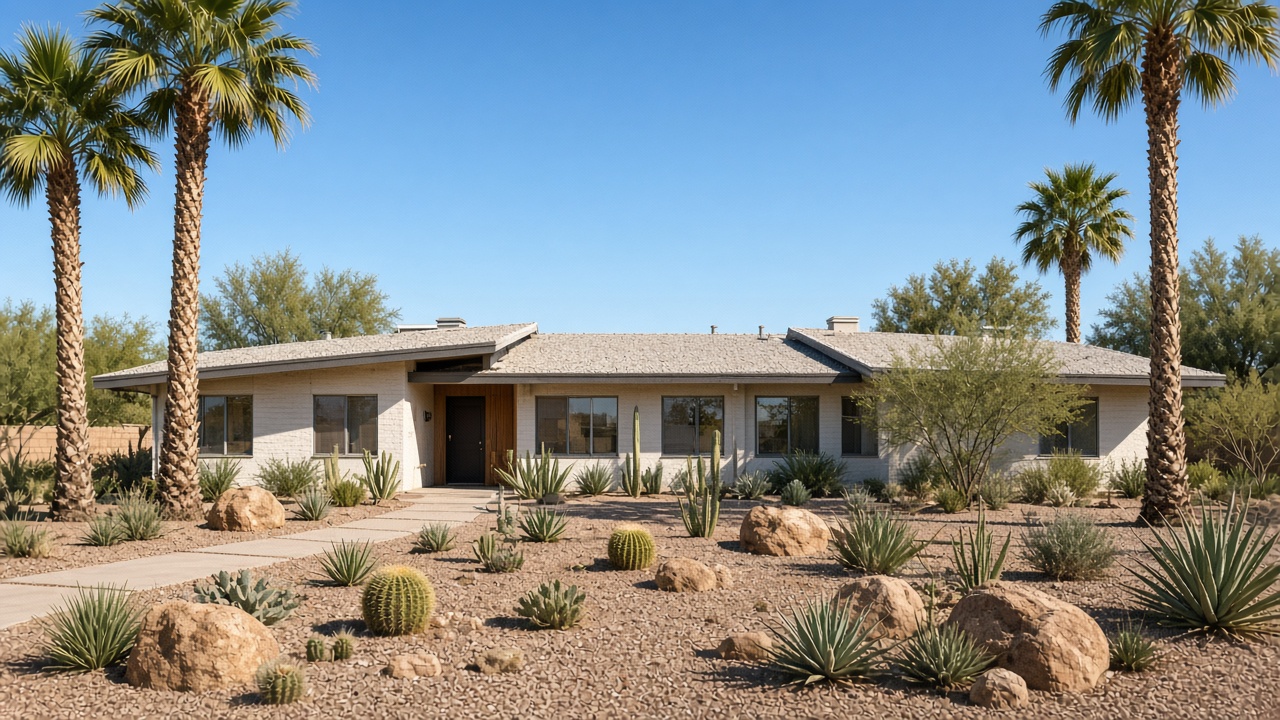
Home Insurance in Phoenix, AZ: Older Homes, Flat Roofs, and Backyard Pools
Home insurance in Phoenix often starts with one question before any other: how old is the house, and how old are its systems? A 1950s ranch near downtown and a newer build on the edge of the city can sit in the same metro and still get very different premium from carriers. Roof type, plumbing, wiring, and a backyard pool usually matter more to the quote than the ZIP code alone.
Howard Castle Insurance has Independent Agents based in Arizona. We compare Phoenix homeowners insurance across 40+ carriers, which matters most when a house has an older roof or original systems that some carriers are cautious about. This article walks through what underwriters look at on Phoenix homes and how to prepare.
Why home insurance in Phoenix starts with the age of the house
Carriers look at a home's age because age hints at the condition of the roof, plumbing, electrical, and heating and cooling. An older home is not uninsurable. It just gets more questions, and the answers shape eligibility and price.
Central Phoenix has many homes built from the 1920s through the 1970s, in neighborhoods with mature trees, flood-irrigated yards, and mid-century ranch homes. Newer subdivisions in North Phoenix and Laveen tend to have newer systems and newer roofs. When we quote an older home, the most useful thing you can bring us is proof of what has been updated and when.
If you are buying an older Phoenix home, call us during your inspection period, not the week before closing. That gives us time to find a carrier that fits the house as it is.
Flat roofs, foam roofs, shingle and tile: what carriers ask about
Roof type and roof age are two of the first underwriting questions on a Phoenix home. Carriers want to know what the roof is made of, when it was installed or last replaced, and its general condition. The answers can affect whether a carrier will write the home and how a future roof loss may be settled.
Phoenix has a wide mix of roofs:
- Flat built-up roofs are on many mid-century ranch homes in central Phoenix and Arcadia.
- Foam roofs, often sprayed over flat roofs and recoated over time.
- Concrete tile is often used on many of the newer homes in North Phoenix, Ahwatukee and Laveen.
- Asphalt shingle on a range of homes across the city.
Each type ages differently in desert sun. A flat or foam roof needs regular maintenance and recoating. Tile can last a long time, but the underlayment beneath it wears out much sooner and needs to be replaced. Shingles need to be replaced more frequently than tile. Some carriers ask for the date of the last recoat, shingle replacement or underlayment replacement, not just the roof's original install date.
Roof age can also affect how a claim is paid. Some policies settle roof damage at replacement cost. Others, especially on older roofs, may use actual cash value, which subtracts depreciation. Ask us which settlement basis a quote uses for the roof before you compare prices.
Helpful records to keep: inspection report, or purchase documents, roofing invoices, warranties, recoat dates, and photos of the roof's current condition.
Plumbing, wiring, and the updates underwriters want to see
Older plumbing and electrical systems are among the items carriers commonly ask about on Phoenix homes built decades ago. Some carriers are cautious about certain pipe materials and older electrical panels. Updates, and proof of the updates by a licensed contractor, can open up more options.
On the plumbing side, carriers may ask about galvanized steel, polybutylene or PEX supply lines. Some were common in older construction, and can raise concerns about leaks over time. If your home has been repiped, keep the invoice.
On the electrical side, carriers may ask about the panel, its age, and whether the home still has older wiring types. Some older panels draw more questions than others. An electrician's report or upgrade invoice gives an underwriter something concrete to work with.
Heating and cooling matter too. In Phoenix, the air conditioner runs much of the year, and carriers sometimes ask about its age.
Updates that are worth documenting:
- Repiping and the date it was done
- Electrical panel upgrades or rewiring
- HVAC replacement
- Water heater replacement
If you are not sure what is behind your walls, a home inspection is a good place to start. Then call our Independent Agents at (480) 500-7911 and we will look for carriers that fit the house.
Historic districts and the cost to rebuild what you have
A historic home can cost more to rebuild than its sale price suggests. Rebuilding with similar materials and craftsmanship is often more expensive than building a standard modern home of the same size. Your dwelling coverage should reflect the cost to rebuild, not the market value.
Phoenix has a number of historic districts in its central core, including Willo, Encanto-Palmcroft, and Coronado. Homes in those neighborhoods may have details like original windows, plaster walls, custom woodwork, or period brick that are hard to match with off-the-shelf materials.
That brings up a few coverage questions:
- Replacement cost vs. market value: Market value includes the land and reflects what buyers will pay. Replacement cost estimates what it would take to rebuild the structure.
- Ordinance or law coverage: If a covered loss requires bringing parts of the home up to current building codes, this coverage can help with those added costs. Limits vary, so ask what a quote includes.
- Local review: Repairs to homes in historic districts may involve local review. Ask the city what applies to your property before you plan major work.
Some carriers are more comfortable with older and historic homes than others. That is a good reason to compare.
Pools, diving boards, and backyard liability
A backyard pool is a common feature of Phoenix single-family homes, and it raises liability questions. If a guest is hurt in or around your pool, your homeowners liability and medical payments coverage are what typically respond, within your limits.
Carriers commonly ask about:
- Whether the pool has a fence or barrier and a self-closing, self-latching gate
- Whether there is a diving board or slide
- Whether the pool is in-ground or above-ground
- The condition of the pool area and decking
Some carriers have restrictions on diving boards or slides, and some may ask for them to be removed. Others write them without issue. Barrier rules are also set by local codes, so check with the city about what applies to your home. Meeting local barrier requirements is good safety practice and can also matter to underwriters.
Pool owners often ask about higher liability limits, and a personal umbrella policy is one way to add protection above your homeowners policy.
Older central Phoenix vs. newer builds on the edge of town
Central Phoenix and newer edge-of-city neighborhoods often get different quotes because the houses themselves are different. Age, roof, systems, and rebuild cost all play into it.
A mid-century home in central Phoenix or Arcadia may have a flat roof, older plumbing, and a large lot with mature trees. Some lots in older neighborhoods still receive flood irrigation, which is part of how those yards stay green. Flood irrigation water on your own lot is a different question that may be answered from a storm flood policy. Our flood insurance article explains how homeowners policies usually treat water from outside.
A newer home in North Phoenix or Laveen may have a tile roof, modern plumbing and wiring, and a smaller lot. It may also sit in an HOA. Our Chandler homeowners article covers HOA and replacement cost basics, and our Gilbert and Mesa home insurance article compares East Valley housing.
If you rent the house out instead of living in it, you need a different policy. See our landlord insurance article.
How our Independent Agents shop Phoenix home quotes
We compare Phoenix home insurance quotes across 40+ carriers. Older homes are where that matters most, because carriers differ on roofs, plumbing, panels, and pools. One carrier may decline a home that another is comfortable writing.
Before you call, gather:
- Year built and square footage
- Roof type, age, and any recoat or replacement records
- Plumbing, electrical, and HVAC update dates
- Pool details, including fencing and any diving board or slide
- Your current declarations page, if you have one
You can learn more on our home insurance and Phoenix insurance services pages, or browse our FAQ and contact page.
Call Howard Castle Insurance at (480) 500-7911 to compare quotes from multiple carriers with our Independent Agents.
FAQ
Will an older Phoenix home with original plumbing be harder to insure?
It can be. Some carriers are cautious about older pipe materials like galvanized steel or polybutylene. Others will write the home, sometimes with conditions. Records of any repiping or repairs help, and comparing carriers gives you more options.
Do carriers treat a foam roof differently from tile?
Often, yes. Carriers look at roof type, age, and condition. Foam and flat roofs need regular recoating, so some carriers ask for maintenance dates. Tile roofs raise questions about the underlayment. Roof type can affect eligibility and how a roof loss is settled.
Does my homeowners policy cover someone hurt in my pool?
Homeowners liability and medical payments coverage typically respond when a guest is hurt on your property, within your limits and policy terms. Carriers may ask about fencing, gates, and diving boards when they write the policy.
Why is rebuilding a historic Phoenix home more expensive than its sale price suggests?
Sale price reflects land and market demand. Rebuild cost reflects labor and materials. Matching original details like plaster, woodwork, and period windows can cost more than standard construction, so dwelling coverage should be based on the cost to rebuild.
Does flood irrigation in my yard count as a flood?
Flood irrigation is a planned watering of your lot, not a flood event. Damage from water entering your home from outside raises separate coverage questions that standard homeowners policies often do not answer. Our flood insurance article explains the difference.