
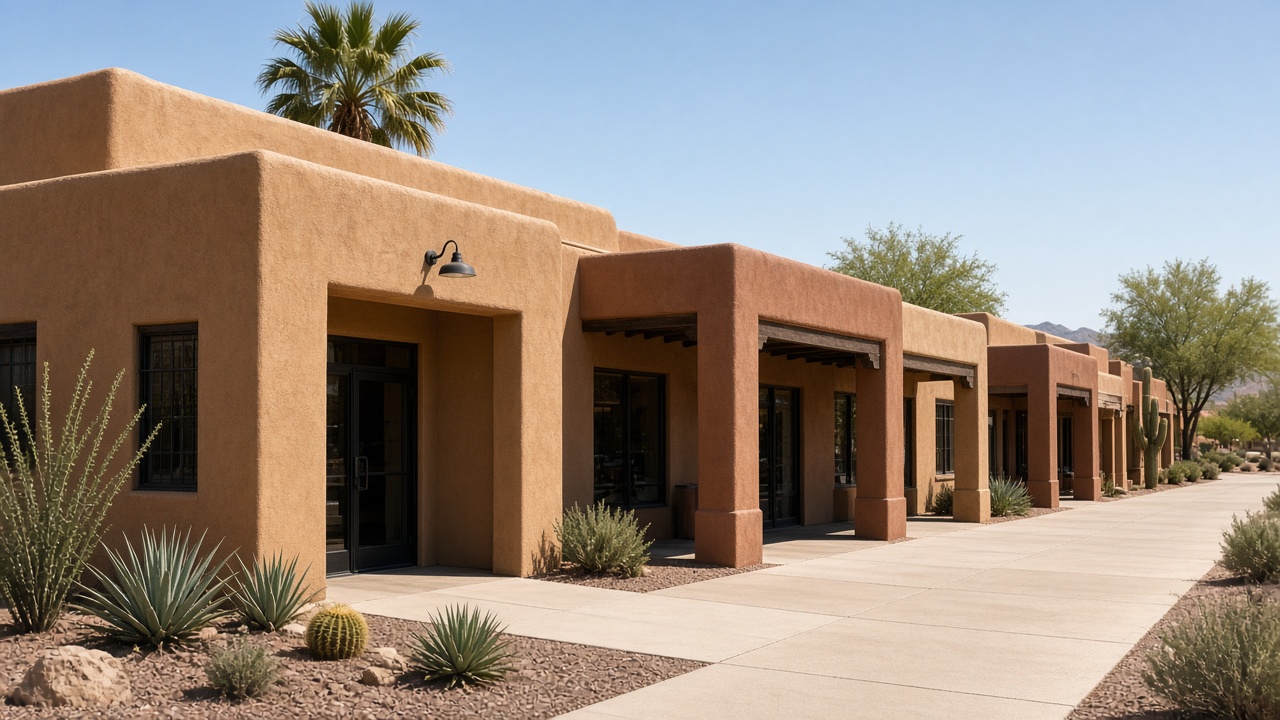
Small Business Insurance in Arizona: What a Business Owners Policy Bundles
For many small businesses, small business insurance in Arizona starts with a business owners policy, or BOP. A BOP packages property coverage, business income, and general liability into one policy for smaller, lower-hazard businesses. The part owners tend to overlook is not the liability. It is the property and lost-income side: what pays to replace your equipment and keep the bills paid if a covered loss closes your doors.
We at Howard Castle Insurance, are Independent Agents based in Arizona. We shop small-business packages across 40+ carriers for retail shops, offices, cafés, repair shops, hair and nail salons, and boutique fitness studios around the Valley. This article focuses on what a BOP does for your space, your stuff, and your income, and on what it leaves out.
What a business owners policy is (and why it is not just general liability)
A business owners policy is a package. It typically combines commercial property, business income, and general liability under one policy, often with optional add-ons. General liability is only one piece of it.
General liability responds when someone else is hurt or their property is damaged because of your business. It does not repair your own building, replace your inventory, or cover your lost income after a fire. Those are property and business income policies, and that is where a BOP earns its place.
We explain liability itself, plus how GL compares with professional liability, in our article on general liability insurance in Arizona. Here, we stay on the property side.
Arizona law does not require a business owners policy. A landlord, lender, or client may require certain coverage in a contract, and a BOP is often a practical way to meet it.
Your building, your stuff, and the tenant improvements you paid for
A BOP's property coverage usually breaks into a few buckets. Your lease decides which ones you need.
- Building: The structure itself. If you own the building, you likely insure it. If you lease, the landlord usually does.
- Business personal property: Your equipment, furniture, inventory, computers, and supplies.
- Tenant improvements and betterments: Changes you paid for in a leased space, such as a build-out, flooring, lighting, or a café counter. These are easy to miss because they are attached to a building you do not own.
Consider a boutique in an East Valley strip center. The landlord insures the building. You, the tenant, paid for new fixtures, a dressing-room build-out, and lighting. If a fire damages the unit, the tenant often needs their own policy to replace those improvements, along with the inventory on the racks.
Many strip-center leases along roads like Gilbert Road, Val Vista, and Alma School ask tenants to carry property coverage for their own contents and improvements plus general liability. Read the insurance section of your lease before you buy anything. It tells you who insures what.
October & November are also a good time to check your property limit. Many retailers carry more inventory heading into the holiday months. If your shelves and stockroom hold more now than when you bought the policy, ask us whether your limit still fits or if you have a seasonal endorsement.
Business income when a monsoon or outage closes the doors
Business income coverage can replace lost income and pay certain ongoing expenses when a covered loss forces you to close or slow down. It generally depends on direct physical damage to your premises from a covered cause. Without that damage, many policies do not respond.
Picture a monsoon storm that tears a section of roof off a café and soaks the kitchen. The café closes for repairs. Business income coverage may help replace the income lost during that period and pay ongoing costs like rent and payroll, within the policy terms. Extra expense coverage may help pay reasonable costs to keep operating, such as renting temporary equipment.
Now picture an area-wide power outage in July. Your shop is not damaged, but you close for two days because there is no power. Many policies do not pay business income in that situation, because nothing at your premises was physically damaged. However, some carriers offer utility service interruption coverage as an add-on, which can respond to certain off-premises utility failures. Terms vary widely, so ask how a specific policy handles it.
A few questions worth asking:
- How long does business income pay after a covered loss?
- Is there a waiting period before it starts?
- Does the policy include extra expense?
- Is any utility service interruption coverage available?
If you are sorting through these questions now, call our Independent Agents at (480) 500-7911.
Equipment breakdown and summer heat
Equipment breakdown coverage is a common BOP add-on. It can help pay to repair or replace equipment that fails from a mechanical or electrical breakdown, which standard property coverage often does not cover.
Arizona summers put real strain on equipment. Rooftop HVAC units on single-story retail run hard for months. Walk-in coolers and refrigeration in a café or small grocery store work constantly. Point-of-sale systems, servers, and computers can also be damaged by a power surge.
When that equipment fails, the repair is only part of the cost. A café that loses refrigeration may also lose the food inside. Some equipment breakdown forms include spoilage and related business income. Others limit it. Ask us what is included before you assume.
Who fits a BOP and who gets pushed to a separate package
BOPs are designed for small businesses with lower-hazard operations. Size, revenue, square footage, and the type of business all affect eligibility, and each carrier draws its own lines.
Businesses that often fit a BOP include:
- Retail shops and boutiques
- Professional offices
- Many cafés and small restaurants, depending on cooking operations
- Boutique fitness studios
- Small repair shops
Businesses that may need a separate package include larger operations, higher-hazard trades, and businesses with significant cooking, manufacturing, or specialized equipment. That does not mean coverage is out of reach. It may mean a commercial package policy that combines separate property and liability forms instead of a BOP.
We do not publish carrier eligibility thresholds because they vary and change. Tell us what you do, how big you are, and where you operate, and we will tell you whether a BOP or a separate package makes more sense.
What stays outside a BOP: workers' comp, commercial auto, professional liability
A BOP is not every policy a business needs. Several common coverages sit outside it:
- Workers' compensation for employee injuries on the job. See our article on workers' compensation insurance in Arizona.
- Commercial auto for vehicles used in the business. See our article on commercial auto insurance in Arizona.
- Professional liability for errors in professional advice or services. Our general liability article explains the difference.
Some carriers offer certain add-ons on a BOP, but these major coverages are usually separate policies. Plan for them alongside the BOP, not inside it.
Running a business from a Gilbert or Chandler home
A homeowners policy usually limits or excludes business property and business liability. If you run a business from home, that can leave a gap.
Many Mesa, Gilbert and Chandler neighborhoods are full of home-based businesses: consultants, online sellers, bookkeepers, and contractors with a home office. The laptop, inventory, and equipment you use for work may not be fully covered under your home insurance. A client who trips on your front steps during a business visit may raise a liability question your homeowners policy does not answer.
There are a few ways to close that gap:
- An in-home business endorsement on your homeowners policy, if your carrier offers one and your business qualifies.
- A BOP, if your business is larger, keeps more inventory, or has clients visiting.
- A separate liability policy, depending on the work you do.
Which one fits depends on what you do and how much business property you have. Ask us before you assume your homeowners policy covers it.
How our Independent Agents shop small-business packages
We are Independent Agents, so we compare small-business packages across the 40+ carriers we have available instead of one. Some carriers prefer offices and retail. Others are more comfortable with cafés or repair shops. And some others offer home based business endorsements on your personal policy. Shopping across many companies helps match your business to a carrier that wants it.
Before you call, gather:
- Your basic business information (Business name and location address)
- What your business does and roughly how much revenue it brings in
- Your lease, especially the insurance section
- A list of equipment, inventory, and tenant improvements
- The number of employees and any business vehicles
- Any certificate or coverage requirements from a landlord or client
Local details can be found on our Gilbert, Mesa, and Phoenix pages, and the broader picture is discussed on our business insurance page. Have a general question? Check our FAQ or contact page.
Call Howard Castle Insurance at (480) 500-7911 to compare quotes from 40+ carriers with our Independent Agents.
FAQ
Is a business owners policy the same as general liability?
No. General liability is one part of a BOP. A BOP typically adds commercial property and business income, so it can help replace your equipment and lost income after a covered loss, not just respond to claims from others.
Does a BOP pay if a summer power outage shuts my shop for two days?
Often not with the basic coverages, if nothing at your premises was physically damaged. Business income usually depends on direct physical loss from a covered cause. Some carriers offer utility service interruption coverage as an add-on, that often covers that type of loss.
Can I use my homeowners policy to cover the business run from my Gilbert home?
Usually only in a limited way. Homeowners policies commonly limit or exclude business property and business liability. An in-home business endorsement or a BOP may be options for coverage, depending on your business.
What makes a business too big or too risky for a BOP?
Larger size, higher revenue, more square footage, and higher-hazard operations can push a business out of BOP eligibility. Each carrier sets its own requirements, so a business one carrier declines, may fit another or be a better fit for a separate commercial package.
Does a BOP include workers' comp or my work vehicle?
No. Workers' compensation and commercial auto are usually separate policies. Plan for them alongside your BOP.